Toxic empathy is a term that has been gaining some traction recently. It’s the idea that empathy is good, but can be taken too far or extended to the wrong people who abuse the good will and generosity of the rest of us.
Those who raise the idea of toxic empathy fall into two camps: they are either concerned about overserving those who are abusing the system, or they are trying to shame those same critics for ignoring the good works being done for some. The two groups speak past each other, failing to acknowledge the fact that both narratives contain truth.
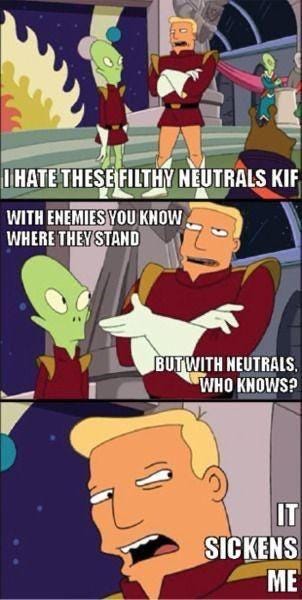
Compassion without discernment can become toxic. So can neutrality without discernment. That’s why I am increasingly worried about toxic secularism.

Canadians have a weird relationship with religion. Many believe we have a policy of separation between church and state, but that is an American misnomer. We accept religion in many places Americans wouldn’t, including publicly funded faith-based schools and Catholic hospitals.
A majority of Canadians express faith beliefs, yet it’s a radicalized anti-religion core who seem to call the shots on many faith policy matters. This toxic secularism rears its ugly head in a few ways: first, when legitimate faiths are treated differently; secondly, when faith-based matters are excluded or ignored entirely; and thirdly, when policymakers consider the what of religion without considering the why.
Here’s a great, recent example.
A friend works for a large Canadian company that has a charitable program where they donate periodically to food banks. As my friend is in a senior role, eventually the time came to make a cheque presentation to his local food bank. There was just one problem, as far as head office is concerned: the local food bank was founded by Catholics.
Never mind that it is basically the only game in town as far as food banks, and that it is certainly the largest. Put aside the fact that at least the next three largest food-providing charities in town are also Christian organizations. Ignore, if you can, the fact that these three organizations have each existed for more than forty years and are established and credible, and undoubtedly serve and work with people of all faith backgrounds. Why, in God’s name, would it matter who is alleviating the suffering?
(Fun fact: the concept of a modern food bank was invented by a Christian!)
Eventually, a local, secular, food-providing organization - undoubtedly featuring Christian volunteers, and possibly staff - was identified and the money was donated. Yet isn’t choosing that other charity simply endorsing a secular view of the world, which is its own belief system? Shouldn’t the focus be on getting the work done, not on who is doing the work or why?
And if why is important to you, would you rather give the money to people who believe in a worldly ideology which preaches beliefs like “he who dies with the most toys wins” and “survival of the fittest” while offering no firm, logically coherent basis for a belief in human dignity? Or one which believes each human has worth and dignity because they are made in the image of a creator God?
Another example comes to us courtesy of the Canadian Armed Forces, who have followed through with a planned ban on prayer in favour of ‘spiritual reflections’, as if Disney movie monologues are analogous to connecting with a higher power.
As my friend Brian Dijkema highlighted recently, it’s only the irreligious who are served by this policy. An approach that honours and respects the religious traditions of a wide variety of believers would be more meaningful for faithful members of our military. They aren’t looking for a pep talk - they are looking to connect with the sacred. This policy misses the why of faith and excludes faith in favour of accommodating secular beliefs.
The military should make room both for people who pray and those who don’t, and their mistake is assuming that the secular alternative is an adequate substitute for faithful servicemen and women.
The tide may be turning. While my generation and prior were taught that faith is a private matter, increasingly it seems Gen Z did not get the memo. As they influence culture, I’m hopeful toxic secularism will end up yet another fad buried by thousands of years of history and tradition. As Jesus said in Matthew 24:35: "Heaven and earth will pass away, but my words will never pass away".